Chaga Mushroom Tops 6 Medicinal Mushrooms for ROS Suppression With Zero Cell Toxicity
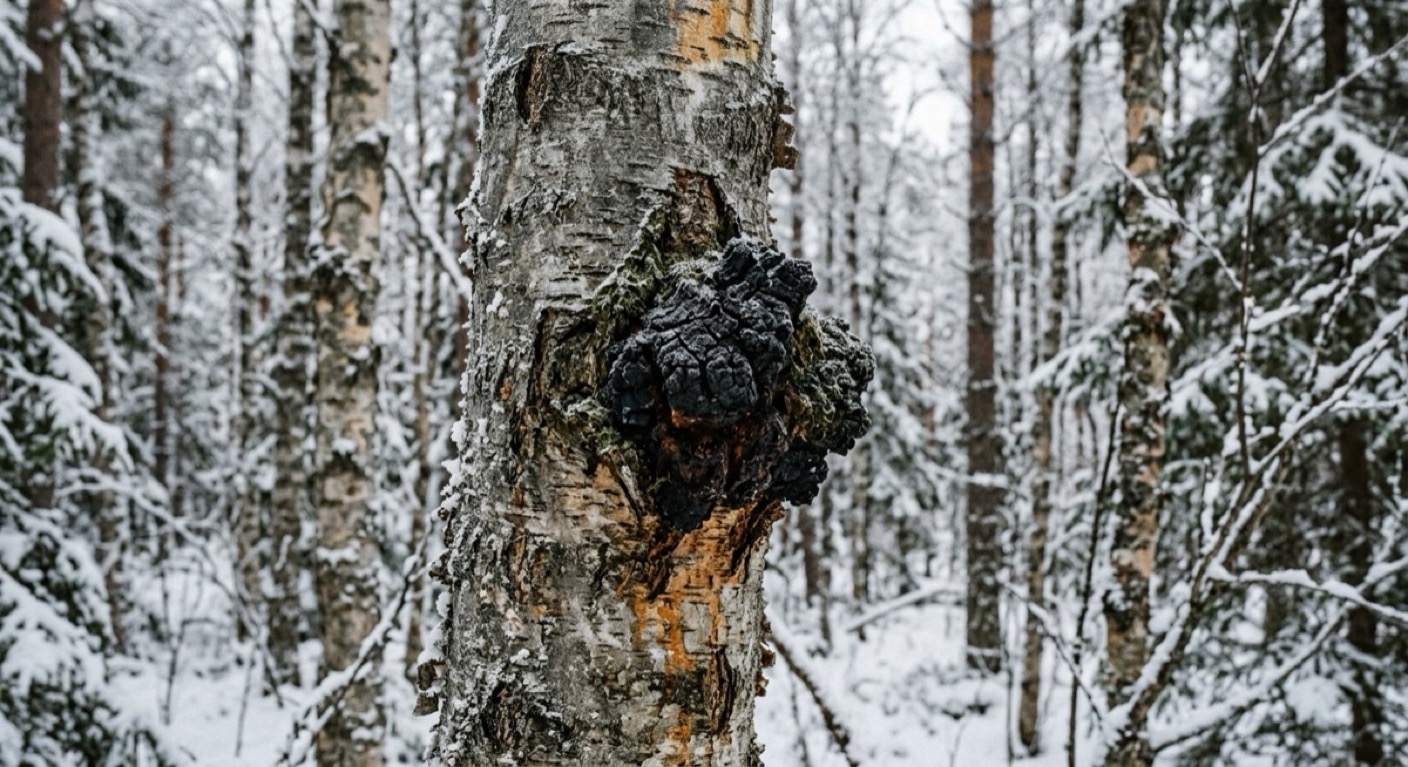
Chaga mushroom (Inonotus obliquus) grows on birch trees across Siberia and northern forests. It has been used in Russian and Scandinavian traditional medicine for centuries, primarily for immune support and vitality. The modern scientific interest focuses on what makes its antioxidant profile distinct from other medicinal mushrooms, and how those differences translate into measurable biological protection.
A study published in 2025 evaluated six medicinal mushroom extracts, including chaga, applied to human corneal epithelial cells (HCE-T), conjunctival cells (iHMGECs), and immune cells (THP-1), comparing their antioxidant potency, anti-inflammatory effects, and safety across all three cell types.
Six Mushrooms, One Clear Leader
The mushrooms evaluated included chaga (Inonotus obliquus), green tea (comparison control), ganoderma (lingzhi/reishi), grifola (maitake), cordyceps, and shiitake.
Antioxidant (ROS suppression) ranking:
- Chaga (IO) — strongest intracellular ROS reduction
- Green tea (GT)
- Ganoderma (GO)
- Grifola (GL)
Chaga demonstrated significant free radical scavenging activity across the full concentration range tested (3–100 μg/mL).
Safety profile: Chaga was the only extract showing no cytotoxicity across all three cell types (HCE-T, iHMGEC, THP-1). This combination of top antioxidant performance with the cleanest safety profile is what distinguishes it in this comparison.
Active Compounds Behind the Performance
Betulin and betulinic acid
These triterpenoids originate in the birch bark that chaga parasitizes. They concentrate in chaga’s dense, dark sclerotium (outer crust). Betulinic acid has documented NF-κB inhibition activity and mitochondrial cytoprotective effects in published research. These are the compounds most studied for chaga’s bioactive properties.
Melanin-polyphenol complex
Chaga’s characteristic black color comes from a melanin-like pigment formed during its growth on birch bark. This pigment structure carries potent free radical scavenging capacity that differs chemically from the brown polyphenols typical of other mushrooms.
Beta-glucans
Polysaccharide fraction with immune-modulating properties. In skincare, beta-glucans are recognized for hydration and barrier-reinforcing effects comparable to hyaluronic acid. Chaga’s beta-glucan content adds this dimension to its antioxidant profile.
Connection to Skin Antioxidant Research
This study’s context was dry eye disease (DED), using corneal and conjunctival epithelial cells as the model. These cells share relevant oxidative stress responses with skin keratinocytes and fibroblasts. The ROS reduction data from this study provides foundational evidence applicable to skin antioxidant research, even though direct skin clinical trials remain limited.
Current applications in beauty and wellness include:
- Serums and ampoules: As part of mushroom complex blends in antioxidant and anti-aging formulations
- Functional beverages and supplements: Powder, tincture, and extract capsule forms
- Sheet masks: Mixed mushroom extract formulations
The Dose Complexity
One nuance from this study deserves attention. While lower concentrations (3–10 μg/mL) inhibited pro-inflammatory markers TNF-α and IL-8 in immune cells, higher concentrations (30 μg/mL and above) paradoxically increased these markers compared to controls. This dose-dependent response is a reminder that more is not always better in bioactive skincare, and that standardized, controlled concentrations matter.
Medicinal Mushrooms in Skincare: Where Each Fits
| Mushroom | Key Compounds | Skin Action | Evidence Level |
|---|---|---|---|
| Tremella (snow mushroom) | Polysaccharides | Hydration, HA-like | Multiple clinical trials |
| Chaga | Betulinic acid, melanin | ROS reduction, antioxidant | Preclinical dominant |
| Ganoderma (reishi) | Beta-glucans, triterpenoids | Anti-inflammatory, immune | Some clinical data |
| Cordyceps | Cordycepin | Energy metabolism, antioxidant | Preclinical dominant |
For hydration, tremella has the most clinical support. For antioxidant and anti-aging goals, chaga’s combination of potency and safety data makes it the strongest candidate among emerging mushroom ingredients. When selecting a chaga-containing product, the meaningful differentiator is extract standardization (betulinic acid or polysaccharide percentage), not just the presence of the ingredient.
Source
PMC - Medicinal Mushrooms and Dry Eye Disease Antioxidant Activity (2025)