Sea Buckthorn's Omega-7 Is the Skin Barrier Fatty Acid Nobody Talks About
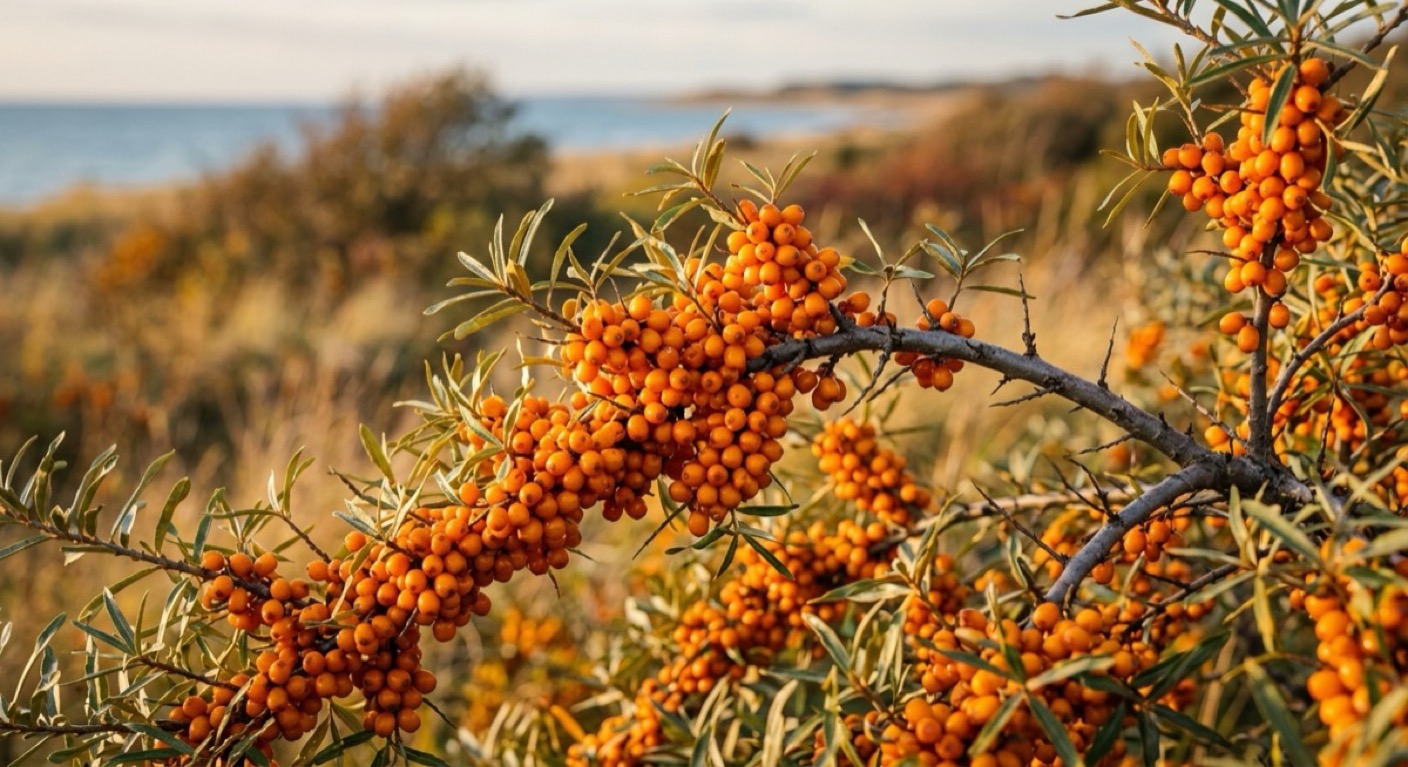
Sea buckthorn (Hippophae rhamnoides) is the kind of ingredient whose nutritional profile reads as implausible until you check the research. Approximately 10 times the vitamin C of an orange. Vitamin E concentrations that rank among the top three plant sources. And uniquely among plants: all four omega fatty acids (3, 6, 7, and 9) present in meaningful concentrations in the same berry.
The detail that distinguishes sea buckthorn from other antioxidant-rich plants is the omega-7 content.
What Omega-7 Does at the Skin Level
Palmitoleic acid (omega-7) shares structural similarity with human sebum, the skin’s natural lipid. This compatibility means it can integrate into the stratum corneum’s lipid matrix directly, reducing transepidermal water loss rather than just adding surface hydration. Most moisturizers work by sitting on top of the barrier. Palmitoleic acid works within it.
At the cellular level, omega-7 activates the SIRT1 (Sirtuin-1) pathway to stimulate collagen synthesis. It also inhibits MMP-1, the primary collagen-degrading enzyme, and increases elastin expression. Both production rate and degradation rate of collagen are affected simultaneously.
The 12-Week RCT
A randomized controlled trial published in the Journal of Functional Foods in 2024 assessed oral sea buckthorn oil supplementation (Omegia capsules) over 12 weeks. Results showed:
- Improvements across skin elasticity, skin color, collagen content, pore size, and redness
- Increased catalase enzyme activity, indicating enhanced antioxidant defense
- Reduced TNF-alpha levels, a key inflammatory marker
- Increased HDL cholesterol
Participants also reported subjective relief from ocular and vaginal dryness, suggesting systemic effects on mucosal tissue beyond the skin surface.
The research team concluded that continuous use for 12 weeks “demonstrated the ability to delay skin aging, increase high-density lipoprotein cholesterol, and antioxidant enzyme activity.”
Anti-Inflammatory Mechanisms
A 2025 review in Frontiers in Pharmacology identifies isorhamnetin and palmitoleic acid as the primary anti-inflammatory agents in sea buckthorn. Their mechanism involves blocking NF-kB and MAPK signaling pathways, the same inflammatory cascades involved in atopic dermatitis, psoriasis, and reactive skin conditions. In atopic dermatitis models, topical sea buckthorn oil suppressed mast cell infiltration and reduced Th2 chemokines TARC and MDC.
Wound healing research adds another data point: topical sea buckthorn oil shortened epithelialization time from 24.8 days to 16.3 days in rat models, through collagen synthesis promotion and increased VEGF expression.
The Nutritional Density Argument
What differentiates sea buckthorn from other vitamin C sources is the simultaneous presence of fat-soluble carriers. Vitamin C and E, carotenoids, flavonoids, and four omega fatty acids in one source means the fat-soluble components (E, carotenoids, omegas) are delivered with the infrastructure to be absorbed and utilized effectively.
The carotenoid content, specifically beta-carotene, is worth noting. High intake over time can contribute a slight yellowing tone to skin in some individuals, which reverses after stopping. This is dose-dependent and not harmful but worth factoring in if taking high-concentration supplements.
Anyone on anticoagulant medications should check with a healthcare provider before starting sea buckthorn supplements, as the fatty acid profile may have mild blood-thinning properties.
Sea buckthorn currently appears in oral oil capsules, topical serums, and facial oils. The oral and topical routes affect skin through different mechanisms, and combining both is a growing pattern in routines focused on barrier reinforcement and anti-inflammatory support.