Nattokinase Lowers Systolic Blood Pressure by 3.45mmHg Across 6 Trials
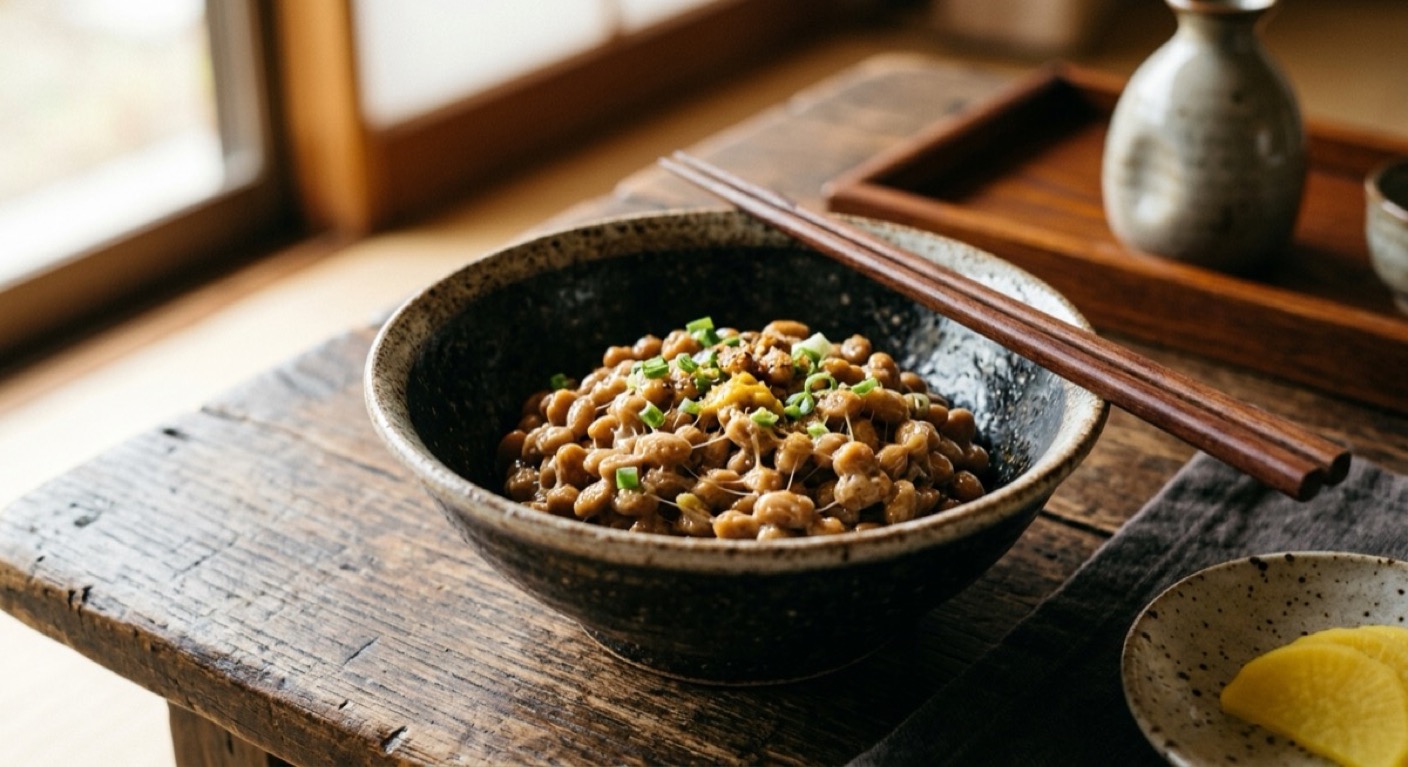
Natto is a traditional Japanese fermented soybean food. Nattokinase is the enzyme produced during fermentation by Bacillus subtilis natto, with the ability to break down fibrin, the primary protein component of blood clots. It’s been studied for cardiovascular effects for decades. A recent meta-analysis now quantifies what those effects actually look like across pooled trial data.
Six Trials, 546 Participants
A systematic review and meta-analysis published in Reviews in Cardiovascular Medicine analyzed 7 randomized controlled trials, with 6 included in the quantitative analysis. Total participants: 546 (311 nattokinase, 296 placebo). Women represented approximately 62% of the pooled population.
Blood pressure results:
- Systolic BP: mean reduction of 3.45mmHg (95% CI: -4.37 to -2.18, p < 0.00001)
- Diastolic BP: mean reduction of 2.32mmHg (95% CI: -2.72 to -1.92, p < 0.00001)
A 3-4mmHg reduction may seem modest in isolation. Scaled across a population, that magnitude consistently correlates with meaningful reductions in cardiovascular event rates. For those at the threshold of hypertension diagnosis, it represents a relevant adjunctive option.
36% Arterial Plaque Reduction at High Dose
Separate from the meta-analysis, a large-scale study conducted in China enrolled 1,062 participants (mean age 67.5 years, with evidence of mild atherosclerosis). High-dose nattokinase at 10,800 FU per day over a sustained period produced a 36% reduction in arterial plaque area, alongside reductions in intima-media thickness (IMT).
This level of effect is in the range that places nattokinase in serious cardiovascular research conversations alongside more established interventions.
The Fibrinolytic Mechanism
Nattokinase works through two pathways. First, it directly degrades fibrin. Second, it activates plasmin, the body’s natural clot-dissolving enzyme, amplifying the fibrinolytic effect. This dual-pathway action on the coagulation cascade is what drives the cardiovascular relevance.
The fibrinolytic activity also explains the most critical safety consideration. Anyone taking anticoagulants (warfarin), antiplatelet agents (aspirin, clopidogrel), or other blood-thinning medications faces a compounded bleeding risk when combining them with nattokinase. This is a hard stop that requires physician confirmation before starting.
Dosage and Lipid Profile Nuances
Daily dosage across the analyzed trials ranged from 1,200 to 8,000 FU (fibrinolytic units). Blood pressure reductions appeared even at lower doses and in shorter-duration trials.
The lipid picture is more complicated. In short-term, lower-dose studies, LDL cholesterol showed a transient increase. This signal disappeared in longer-duration, higher-dose trials. Triglycerides showed no significant change. The lipid effects appear dose-dependent and may not be a concern at therapeutic durations.
No serious adverse events were reported across any of the 6 analyzed trials.
Practical Considerations
The natto allergy point is worth clarifying: natto allergy and soy allergy are separate. Someone without a soy issue can still react to natto-specific proteins. If trying fermented natto foods for the first time, start small.
Standard pre-surgery guidance recommends stopping nattokinase 2 weeks before any procedure, given its effects on clotting time.
Cardiovascular health starts with lifestyle foundations: sodium reduction, consistent aerobic exercise, weight management. Nattokinase is a tool that can sit on top of those foundations, not a substitute for them.