Lion's Mane: Single Dose Shortened Stroop Task Reaction Time at 60 Minutes
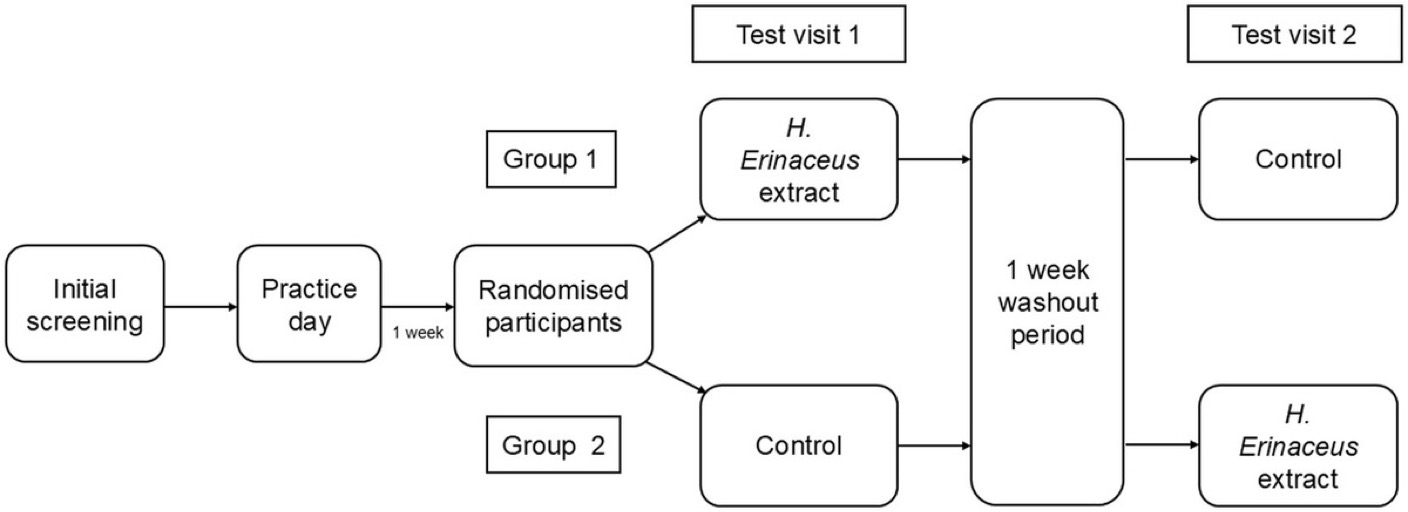
A 2025 Frontiers in Nutrition clinical study on Lion’s Mane (Hericium erinaceus) cognitive effects reported that a single dose of standardized extract significantly shortened Stroop task reaction time at 60 minutes in 41 healthy adults aged 18-45.
Single-Dose Effect
The Stroop test measures executive function and attention inhibition. When word color and meaning conflict (e.g., “blue” written in red), reaction time slows. Participants 60 minutes post-Lion’s Mane showed significantly faster responses than placebo.
A single dose produced measurable short-term cognitive effect, not just chronic administration.
28-Day Subjective Changes
Over 28 days, the group trended toward reduced subjective stress. While not reaching statistical significance, mood and stress perception moved consistently in the positive direction.
Active Compounds: Hericenones and Erinacines
Lion’s Mane’s key actives are hericenones and erinacines. Animal and cell studies show these compounds stimulate Nerve Growth Factor (NGF) synthesis.
NGF is a protein involved in neuron survival and growth, a key target in Alzheimer’s and mild cognitive impairment (MCI) research. Elevated blood NGF in humans hasn’t been clearly confirmed yet, so whether clinical effects come through NGF remains under study.
The Earlier MCI Trial
A 2008 Japanese double-blind trial in 30 MCI patients showed that 3 g/day Lion’s Mane extract for 16 weeks significantly improved cognitive function (HDS-R scale). Effects disappeared 4 weeks after discontinuation.
Dose and Protocol
Standardized extract: 500-3,000 mg/day Duration: 4-16+ weeks for sustained effect Forms: capsule, powder, tea. 30%+ beta-glucan standardized products are quality indicators Timing: with meals, morning or midday
Culinary vs. Supplement
Lion’s Mane has a crab- or lobster-like flavor in cooking. However, fresh culinary mushroom concentration is tens of times lower than standardized extract. For cognitive purposes, standardized extract has clearer efficacy.
Relation to Adaptogens
Lion’s Mane isn’t technically an adaptogen but frequently appears with ashwagandha and rhodiola in stress and cognitive supplement stacks. Different mechanisms make combinations possible.
Safety
Safety profile is strong. Rare allergic reactions (rash, itching) have been reported. Mushroom-allergic individuals should use caution. Anticoagulant users should consult clinicians.
Limits
Most trials are small and short-term, with large long-term RCTs still lacking. Current evidence: short-term cognitive improvement from single dose, stress and mood support from chronic use, rather than broad “brain benefit” claims.
Lion’s Mane is joining creatine, omega-3, B vitamins as a brain-health stack component. As human NGF clinical data accumulates, its position will clarify further.