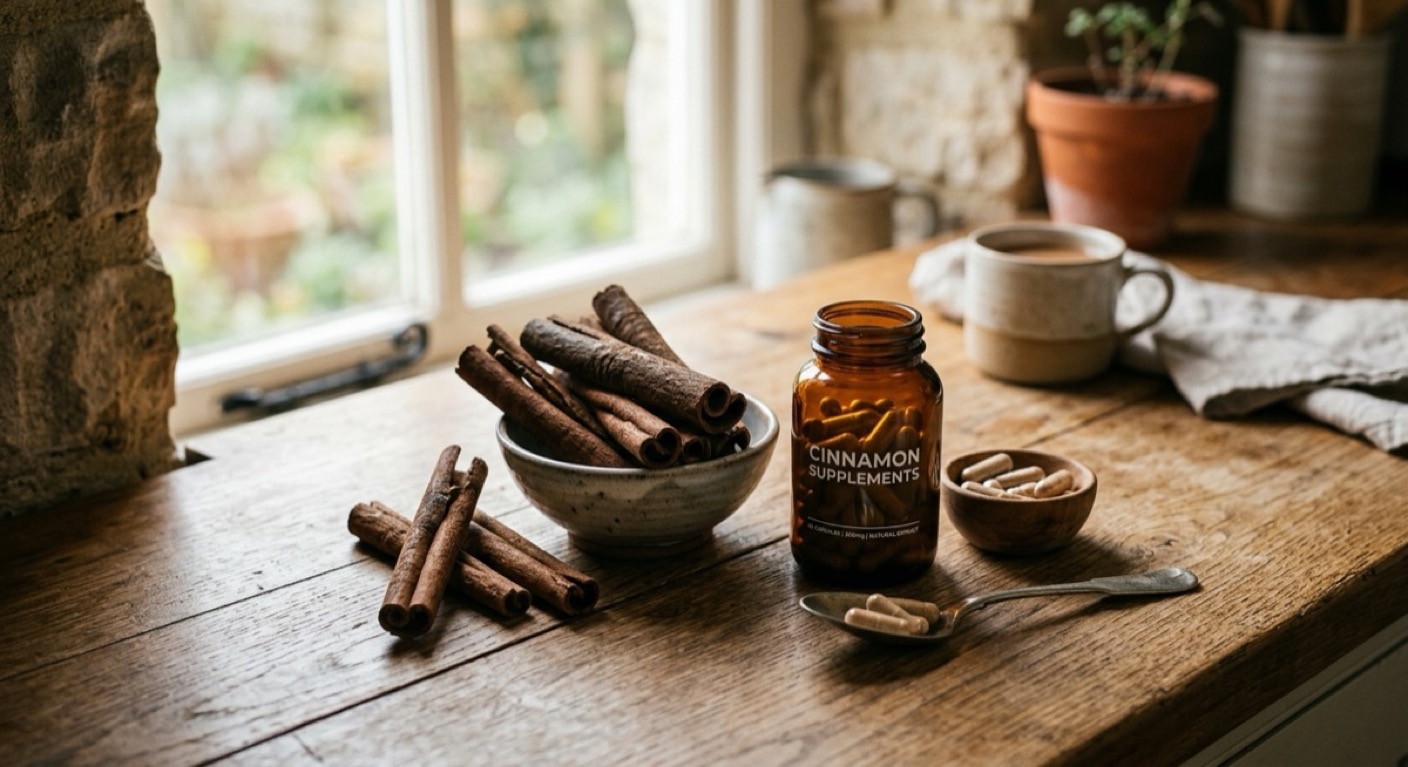
Berberine Plus Cinnamon Significantly Reduced Fasting Glucose and HbA1c
Berberine’s blood sugar effects are noteworthy on their own, but the combination with cinnamon has drawn researcher interest because it engages a different metabolic pathway simultaneously. A 2025 randomized controlled trial (RCT) indexed on PubMed tested whether this pairing delivers real results in type 2 diabetes patients.
Two Pathways, One Target
Berberine activates AMPK, the cell’s energy sensor, reducing hepatic glucose production and increasing muscle glucose uptake. Cinnamon approaches the problem differently. It enhances insulin receptor sensitivity, allowing the same amount of insulin to shuttle more glucose into cells. Because the two compounds converge on the same target through distinct mechanisms, their combination holds promise for complementary effects.
Trial Results, Both Fasting Glucose and HbA1c Declined
In this RCT, type 2 diabetes patients receiving a berberine-cinnamon combination supplement showed significant reductions in both fasting blood sugar (FBS) and HbA1c compared to placebo. HbA1c reflects average blood glucose over the preceding 2~3 months, so a decrease in this marker signals sustained improvement rather than a temporary fluctuation.
The typical standalone berberine dose is 500mg taken 2~3 times daily, though the exact dosing protocol for berberine-cinnamon combinations varies across studies. Following the product label’s recommended amount is safer than self-adjusting doses.
Cinnamon Type Matters
There are two main varieties of cinnamon. Ceylon cinnamon (Cinnamomum verum) and cassia cinnamon (Cinnamomum cassia). Cassia has high coumarin content, which can burden the liver with prolonged use. For supplementation, Ceylon cinnamon with its low coumarin profile is the safer choice. Check whether the product label specifies “Ceylon” or “C.verum.”
What to Verify Before Starting
The most critical consideration is interaction with diabetes medications. Both berberine and cinnamon lower blood sugar, so adding them on top of metformin, sulfonylureas, or insulin raises hypoglycemia risk. This combination should only be introduced after consulting a physician.
Gastrointestinal discomfort is berberine’s most common side effect. Splitting the dose across meals and starting low before gradually increasing over 2 weeks is standard practice. Monthly costs for berberine-cinnamon combination products typically range from $15 to $40.
Frequently Asked Questions
Why does combining berberine and cinnamon work better? Berberine activates the AMPK pathway to boost glucose metabolism, while cinnamon enhances insulin receptor sensitivity through a separate mechanism. Because each component targets blood sugar through a different route, combining them can produce complementary effects.
Which type of cinnamon should I choose? Ceylon cinnamon (C.verum) has lower coumarin content and is safer for long-term use. Cassia cinnamon (C.cassia) contains higher coumarin levels that may strain the liver over time. For supplementation, look for products labeled “Ceylon” or “C.verum.”
I’m on diabetes medication. Can I add berberine and cinnamon? You must consult your physician first. Both berberine and cinnamon lower blood sugar, so combining them with prescription diabetes drugs (metformin, sulfonylureas, insulin) can increase the risk of hypoglycemia.