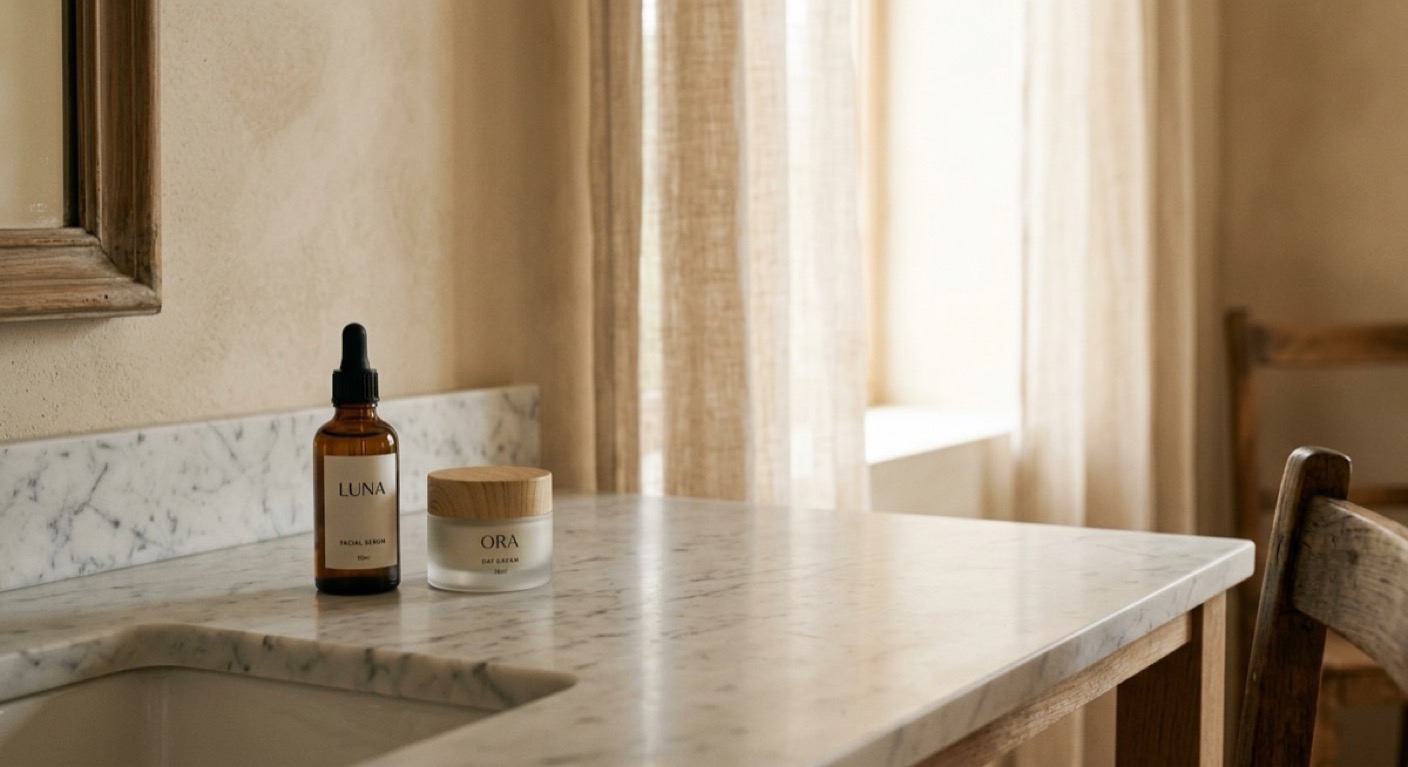
The 10-Step Routine Era Is Over. Skincare in 2026 Is All About Biotech Minimalism
The center of gravity in the skincare market is shifting. In the first half of 2025, K-beauty sales grew 37.2% year-over-year, crossing the $2 billion mark. On paper, it looks like a golden age. But beneath those numbers, something quieter is happening: multi-step routine fatigue is building.
Beauty Independent’s 2026 skincare trend report lands precisely at the intersection of these two currents.
Why Masstige Is the Fastest-Growing Tier
Over a nine-month stretch in early 2025, prestige skincare grew just 1%. Mass market moved 5%. Masstige, the middle tier priced at the Sephora or Olive Young range, grew 14%. Consumers are not reflexively buying expensive, and they are not defaulting to cheap. They want clinical data and verified ingredients first.
The formula this shift creates is straightforward: data over marketing language, efficacy density over step count. Consumer expectations have simply risen.
Exosomes and PDRN, the Next Generation of Skincare
Among the ingredient categories gaining ground, two stand out: exosomes and PDRN.
Exosomes are nano-sized particles secreted by cells that help facilitate signaling between skin cells. They have a stronger stability and efficiency profile than traditional stem cell ingredients, which has drawn attention from both clinic and retail skincare brands. Beauty Independent projects that “as the science becomes more refined, biotech-based and vegan-compatible exosomes will move into the mainstream.” Plant-derived exosomes in particular are expanding rapidly within the clean beauty space.
PDRN (polydeoxyribonucleotide), extracted from salmon DNA, is used in skin regeneration and barrier reinforcement. It is already a standard in clinical dermatology treatments, but 2026 is expected to mark the shift into topical consumer formats. Industry analysis citing “explosive growth in glass skin and PDRN-based products” backs this trajectory.
What Is Losing Ground: Single-Ingredient Obsession and Fear Marketing
The retreat is just as telling as the advance.
The single-ingredient obsession, the idea that retinol alone or niacinamide alone can solve everything, is cooling. Trend cycles have compressed, which means yesterday’s hero ingredient becomes tomorrow’s afterthought faster than ever. Beef tallow, slugging (the petroleum jelly final-layer technique), and skin cycling all had their TikTok peaks. Industry analysis places each of them past that peak now.
Fear-based clean beauty is following the same trajectory. Marketing built around “this ingredient is dangerous” is losing consumer trust. Instead, the focus is shifting toward approaches that genuinely support a healthy skin barrier: microbiome support (the ecosystem of beneficial microorganisms living on skin’s surface) and postbiotics (fermentation byproducts from beneficial bacteria) are getting the attention that fear-mongering once captured.
Body Care and the Rise of Expert Channels
Skincare attention is moving beyond the face. The global body care market is projected to grow from approximately $16.1 billion in 2024 to $20.1 billion by 2030. The energy that once went into facial skincare routines is flowing toward body serums and barrier-reinforcing lotions.
Spas and clinics are also emerging as new discovery channels. A direct recommendation from a professional carries more weight than an online review, and combined with AI personalization, these channels are capturing the growing consumer demand for “what actually works for my skin.”
The question the 2026 skincare market keeps asking is ultimately a single one: can you reduce the steps and raise the results? Biotech ingredients are the market’s current best guess at an answer. The verification is ongoing.